Why Roof Leaks Show Up Far From the Actual Source
September 15, 2026
Quick Answer: A leak stain on a ceiling almost never marks the spot where water enters a roof. Water follows rafters, decking, and insulation downhill before gravity finally pulls it through a ceiling, a light fixture, or a nail hole, often five to twenty feet from the actual break in the roofing. Cold-climate homes see this pattern stretch even further in winter, when ice dams push meltwater sideways and backward under the shingles. Patching the spot directly above a stain fixes almost nothing if that isn't where water is truly getting in. A real repair starts in the attic, tracing the path the water actually took.
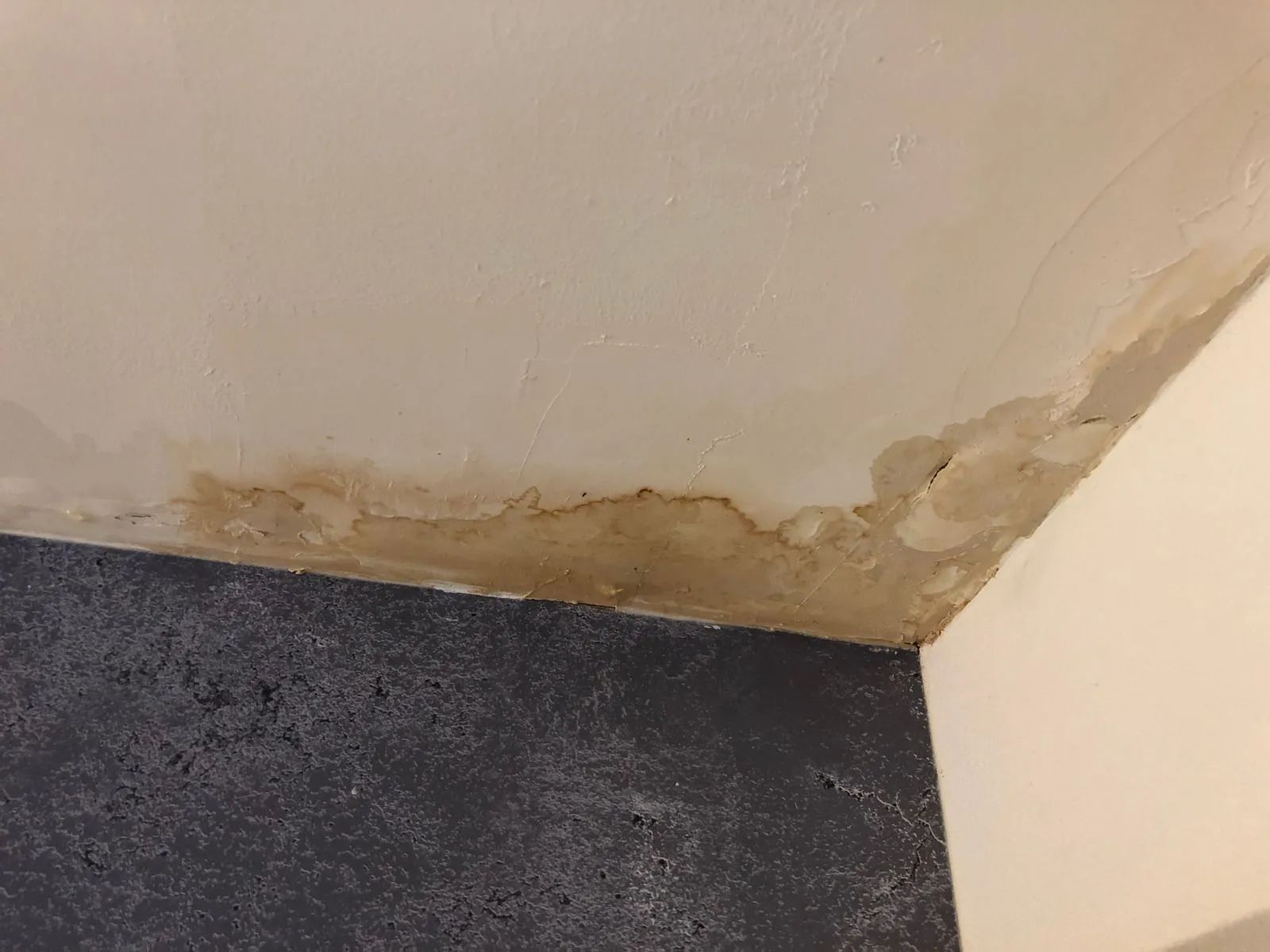
A brown ring spread across a bedroom ceiling in Warminster last spring, right in the middle of the room, nowhere near a chimney, a vent, or an exterior wall. The homeowner climbed into the attic expecting to find a hole in the roof deck directly above the stain. Instead, the wood up there was bone dry. The actual break in the shingles turned out to be nearly twelve feet away, near a plumbing vent boot that had cracked over the winter. Water had been running down the underside of the decking for weeks, tracking along a rafter, before it finally found a gap in the insulation and dropped onto the drywall below.
This happens more often than most homeowners expect. It's a pattern that shows up on roof after roof. A leak rarely announces itself where it starts. It shows up where gravity and the shape of a roof's framing finally let it through, and that spot can be feet, sometimes yards, from the real problem.
Water Follows the Roof's Framing, Not a Straight Line Down
Think of an attic space less like an empty room and more like a shallow, sloped maze built out of wood. Rafters, trusses, decking, and insulation form layers that water has to work through before it reaches a ceiling. Once moisture gets past the shingles and underlayment, it doesn't fall straight down through drywall the way rain falls from a cloud. It clings to wood grain, rides the slope of a rafter, and collects wherever framing dips or insulation compresses.
Gravity Plus The Path Of Least Resistance
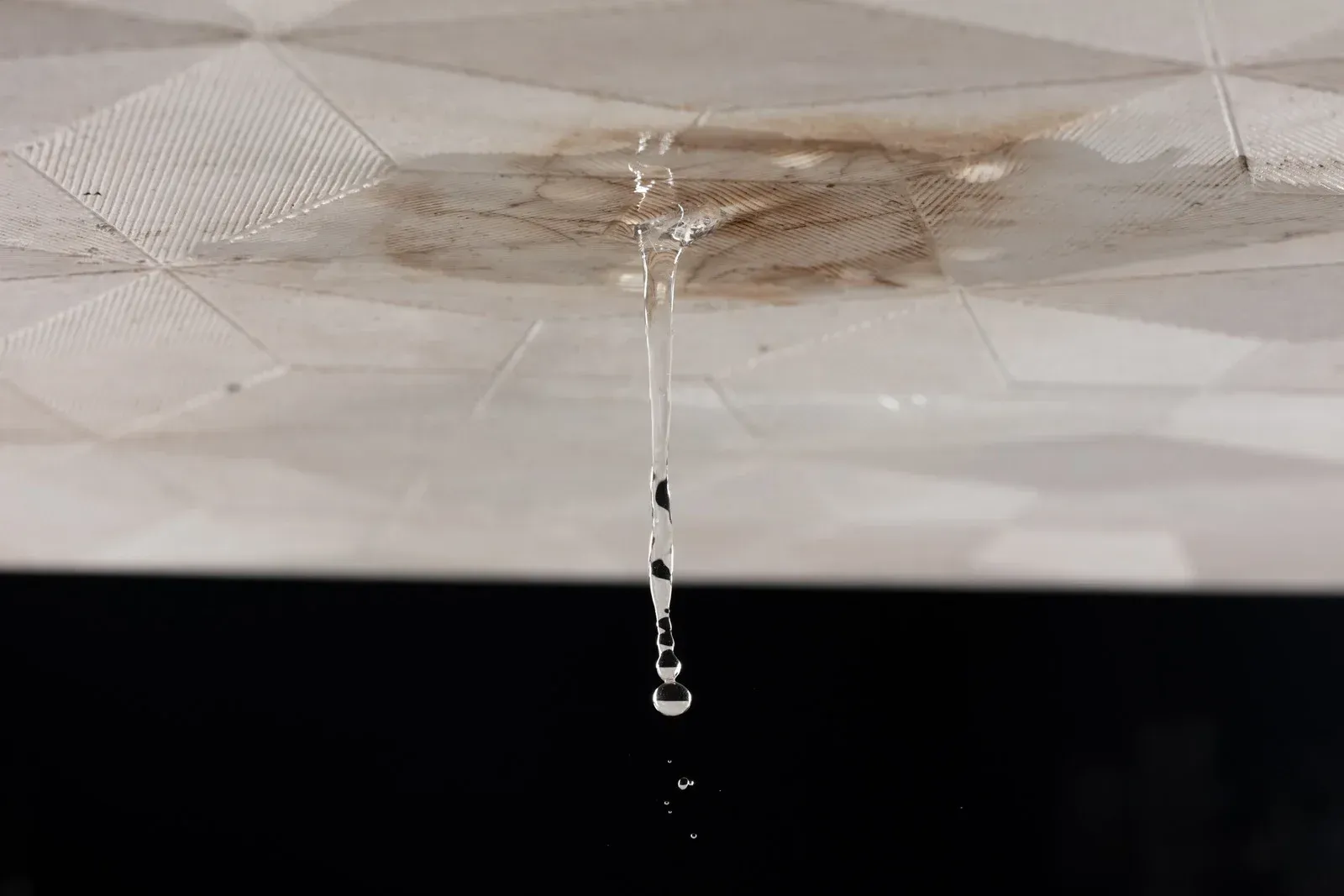
Water follows the easiest route, traveling beneath roof decking, along rafters, or through insulation until reaching a low point. That point might be a light fixture, drywall seam, or old nail penetration.
Roof Slope Changes The Math
A steep roof sheds water quickly outside, but once water gets beneath shingles, the pitch creates a longer downhill path. Lower slopes encourage pooling and soaking, so stains may appear near or far from the source.
Older Framing Adds More Turns
Older homes throughout Bucks and Montgomery County often contain additions, dormers, or re-roofed sections where new framing meets older structures. These transitions create opportunities for water to change direction, slow down, or travel through different pathways.
The Usual Entry Points, and Why They're Rarely Where the Stain Is
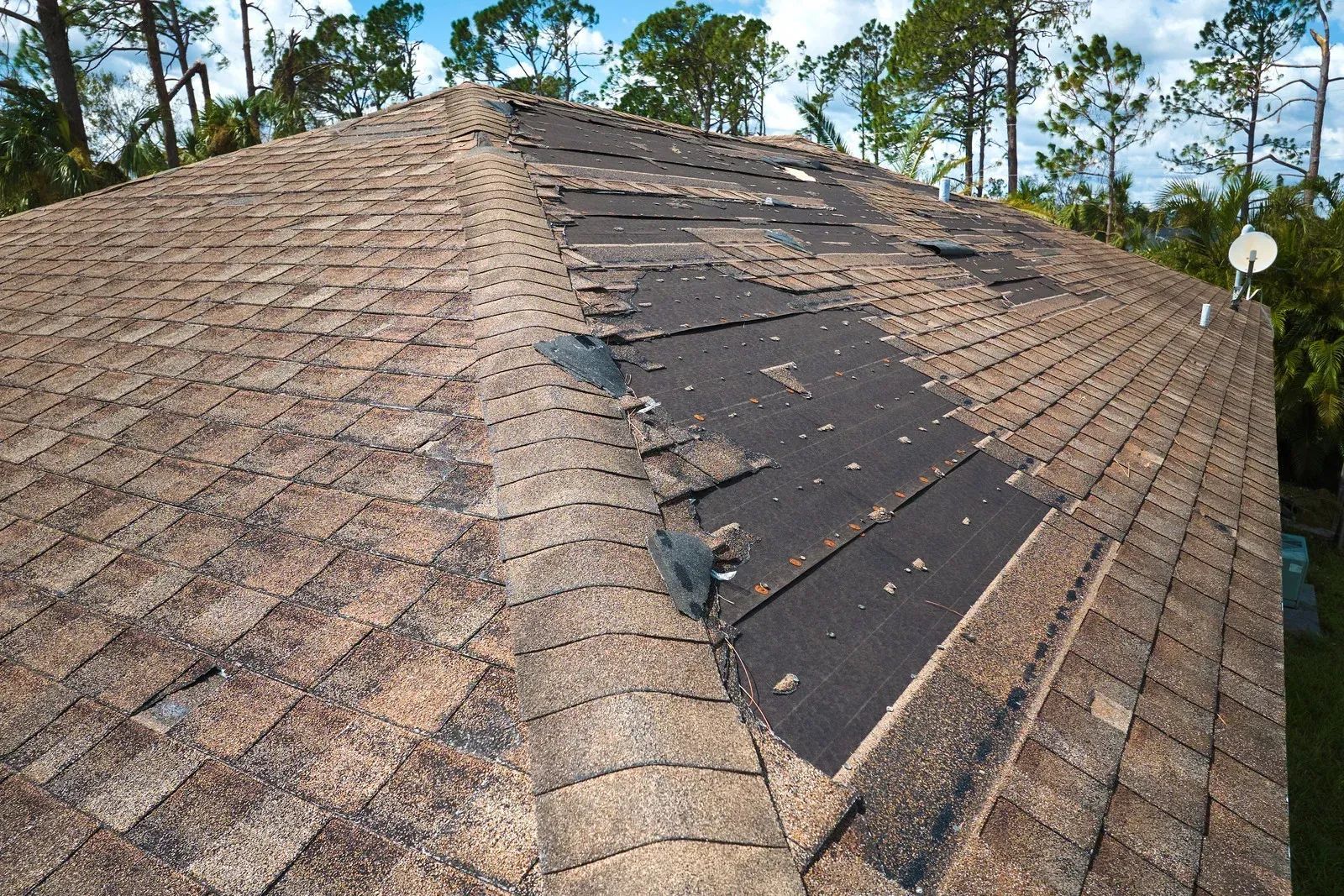
Most leaks don't start in the open field of shingles in the middle of a roof slope. They start at a detail: a seam, a penetration, or a place where two roofing materials meet.
Flashing Around Chimneys And Walls
Metal flashing seals roof-to-wall joints. Cracks, lifted sections, or failed sealant allow water behind flashing and into wall framing, sometimes producing ceiling stains well below the roofline.
Vent Boots And Pipe Collars
Rubber gaskets around plumbing vents commonly deteriorate on older roofs. A small split can admit steady water, which travels along rafters before eventually dripping through ceilings.
Valleys Where Two Roof Planes Meet
Roof valleys carry concentrated water during rainfall. Debris, worn shingles, or damaged underlayment can redirect water sideways along valley boards, causing leaks to appear well downhill from their entry point.
Skylight Curbs
Skylights interrupt the roof deck, making their seals vulnerable to constant thermal movement. Water passing the frame can travel down the interior shaft before reaching the ceiling, appearing several feet away.
Missing Or Lifted Shingles
A missing shingle exposes underlayment or decking. Wind-driven rain can travel sideways beneath neighboring shingles before entering, causing interior stains to appear uphill or downhill from the actual gap.
TIP: If a ceiling stain shows up, check the attic directly above it and several feet uphill from it before doing anything else. Look for dark trails on the underside of the decking, dampness on a rafter, or matted insulation. That trail usually points toward the real entry point faster than staring at the shingles from the ground.
How Pennsylvania Winters Stretch the Distance Even Further
A four-season climate changes how far water can travel before it shows up indoors. Snow that melts and refreezes doesn't behave like a simple rainstorm.
Ice Dams Push Water Backward
Heat escaping through the attic melts snow above insulated areas. Meltwater reaches cold eaves, refreezes, and forms dams. Water then backs up beneath shingles, traveling sideways across decking until reaching seams or nail holes.
Freeze-Thaw Cycles Widen Existing Gaps
Small shingle lifts or flashing cracks may seem harmless during summer. Winter freeze-thaw cycles let water enter, freeze, expand, and widen those gaps. Each thaw allows more water inside and increases its travel path.
Attic Temperature Swings Matter More Than Most Homeowners Realize
Poor attic ventilation creates uneven roof temperatures, allowing snow to melt over warmer sections while eaves remain frozen. This temperature difference drives ice dam formation and explains varying leak patterns between nearby homes.
Why Patching the Stain Almost Never Fixes the Leak
Here's where a lot of well-intentioned repairs go wrong. A homeowner sees a stain, climbs into the attic, and seals whatever looks slightly off directly above that spot. The leak seems to stop for a while. Maybe the next few storms are light, or the wind blows from a different direction. But it comes back, sometimes worse, because the actual entry point was never touched.
Tracing has to happen before repair, not after. Water that entered near a chimney and traveled eight feet along a rafter before dripping through a ceiling fixture will keep entering near that chimney no matter how much sealant goes on the drywall side. The fix belongs at the source, and finding the source means following the trail the water left, not the spot where the trail ended.
WARNING: A ceiling that's bulging, soft, or sagging under a stain may be holding trapped water above it. Poking or cutting into a bulging ceiling without controlling the drainage first can bring down a section of wet drywall and insulation with no warning. If a stain has gone soft to the touch or the ceiling has started to sag, treat it as a structural concern and get the area assessed before doing anything else to it.
How a Roofer Traces a Leak Back to Its Actual Source
Finding the real entry point takes a process, not a guess. A thorough inspection usually moves from the inside out.
Attic Inspection First
Inspecting decking, rafters, and insulation from inside the attic often reveals water trails, wood staining, and discoloration more reliably than examining the roof surface.
Working Uphill From The Stain
Instead of assuming the leak sits directly above the ceiling stain, inspectors follow moisture trails upward along framing until they reach the likely entry point.
Checking Penetrations And Transitions Before Open Shingle Fields
Inspect chimneys, vents, skylights, valleys, and wall intersections first because these areas contain more potential failure points than uninterrupted shingle surfaces during storms.
Controlled Water Testing When The Source Still Isn't Clear
When the leak path remains unclear, controlled water testing over small roof sections can isolate the entry point while someone watches from inside the attic.
Skipping this process and repairing based on where the ceiling looks worst is one of the most common reasons a leak comes back after a repair that should have worked.
Repair Work Doesn't Stop at Sealing the Roof
Once the actual leak point is identified and sealed, the story isn't necessarily over. Water that traveled a long distance along a rafter or across insulation may have already done damage well away from both the entry point and the visible stain.
Wet insulation loses much of its ability to slow heat transfer and can stay damp long enough to grow mold even after the leak itself is fixed. Decking that's been soaked repeatedly can soften and lose its grip on fasteners. Framing exposed to moisture over multiple seasons can develop the kind of soft, spongy feel that signals rot has already set in. A repair that actually holds accounts for everything the water touched on its way through the structure, not just the hole it came in through.
Is it safe to mount a TV over a fireplace?
Yes, with the right precautions. Heat off the firebox, wall structure, and viewing angle all need checking first. A gas or electric unit with managed heat can run for years. Wood-burning fireplaces with no heat plan cause trouble.
How far above the fireplace should the TV be mounted?
A common range is 8 to 12 inches between mantel top and screen bottom, though it shifts with your fireplace and wall height. The hotter the unit, the more clearance you want, keeping the screen above rising heat.
Can the heat from my fireplace really damage a TV?
It can, usually slowly. Most sets are rated up to 100-104 degrees, and unmanaged fireplace walls can climb past that. Over time this shows as dead pixels, a warped bezel, or shutdowns. Managing heat prevents it.
Do I need a special mount for a TV over a fireplace?
Most of the time, yes. A fixed mount aims the screen over your head. A tilting mount angles down toward viewers; full-motion arms pull out and down. The right choice depends on screen size and wall height.
Can I hide the wires if my fireplace is brick or stone?
It's harder than drywall but doable. Masonry rarely has an open cavity, so the path must be planned before mounting. Options range from in-wall routing to low-profile surface channels. Mapping the route first avoids disruptive retrofits.
Should the TV be bigger or smaller than the fireplace?
As a rule, match the firebox width or go slightly smaller, keeping the wall balanced. Oversized panels over narrow hearths are common now, but proportion makes the wall read as one clean focal point, not competing elements.
Frequently Asked Questions
Why doesn't a roof leak straight down from where the shingle damage is?
Water under roofing follows framing and decking, not a straight vertical drop. It travels along rafters and across insulation, following whatever slope it finds, until it drips through several feet from entry.
How far can water travel before it shows up as a stain?
It varies with roof slope, framing layout, and insulation saturation, but water commonly travels five to twenty feet along decking or rafters before becoming visible. Steeper roofs stretch that distance even further.
Can a small drip really mean a much bigger problem overhead?
Yes. A slow, steady drip usually means water has found the same path for a while, giving it time to soak insulation and travel further with each rainfall. Minor drips can hide larger wet areas.
Why didn't an earlier repair stop the leak?
If the repair targeted the area above the stain rather than the actual entry point, the real gap in the roofing was likely never addressed. This is a common reason leaks return after a patch.
Does the time of year change where a leak shows up?
Yes. During winter, ice dams can force meltwater backward and sideways under shingles in ways summer rain never would, sometimes sending water into entirely different sections of the attic
Is it safe to just watch a small ceiling stain for now?
A stain that isn't growing might feel low-priority, but water is still moving through insulation and framing with every rain or snowmelt. Waiting usually means more of the structure gets exposed.
A Stain Is Only the Start of the Story
Following a leak back to its true source takes patience most people don't expect a roof repair to need. Water moves through framing and insulation on its own schedule, tracing rafters and decking long before gravity finally pulls it through a ceiling. A stain marks where that journey ended, not where it began, and treating the two as the same thing is how so many repairs miss the actual problem entirely, leaving the real gap in the roofing untouched and ready to leak again.
Uncle Al's Roofing
has spent 15+ years tracing leaks back to their source for homeowners across Southampton and Huntingdon Valley, PA, working from the attic outward rather than guessing from the ceiling down. That process, checking flashing, valleys, and vent boots before assuming anything about open shingle fields, is what separates a repair that holds from one that gets redone a year later. Finding where a roof actually failed takes more than a ladder and a caulk gun, and it makes all the difference once winter arrives.