Common Causes of Roof Leaks in Older Pennsylvania Homes
July 31, 2026
An older home has a lot going for it: solid framing, mature trees, a neighborhood that filled in decades ago. What it does not have is a young roof, and the exterior systems that keep water out have been taking a beating through every kind of weather the Northeast throws at them. If you own a home built in the 1950s through the 1980s across Bucks and Montgomery counties, the leak you noticed this spring almost never started where the stain appeared. It started at a worn detail on the roof that has quietly been giving up ground for years, and most of these roofs fail in the same handful of ways.
Quick Answer: Most roof leaks in older Pennsylvania homes trace back to failed flashing around chimneys, valleys, skylights, and wall intersections, followed by aged or storm-damaged shingles, ice dams that force water uphill under the roofing in winter, and clogged gutters that let water back up against the eaves. Because water travels along decking and framing before it drips indoors, the visible stain is usually feet away from the actual entry point. Older homes are more prone to these problems because their flashing, sealants, and attic insulation were installed to standards that predate today's understanding of how a four-season roof sheds water. Correct repair means finding the true source, not patching the stain.
Why Older Homes in This Region Leak Differently
Age alone does not cause a leak. Age combined with our climate does. A roof in Southampton, Warrington, or Doylestown works through hot humid summers, sudden storms, freeze-thaw cycles, and snow load, sometimes all within a few months, and every one of those conditions fatigues the materials that seal a roof.
Sealants and mastic dry out
The tar and caulk used around penetrations and older flashing were never meant to last the life of the roof. After fifteen or twenty winters they crack, shrink, and pull away from the metal and masonry they were supposed to bond to. Once that bond breaks, there is a path for water.
Original details were built to older standards
Many suburban homes in this area were roofed before self-adhering ice-and-water membrane at the eaves became common practice, and before attic ventilation and insulation were understood the way they are now. Those homes can shed rain fine and still leak in winter, because the failure mode is different.
Layered roofs hide problems
Plenty of older homes carry a second or third layer of shingles installed over the original. Extra layers trap heat, add weight, and make it much harder to detect and correct the flashing underneath, which is usually where the real trouble sits.
Flashing Failure: The Leak We Find Most
Flashing is the metal that seals the spots where a flat plane of shingles has to meet something else: a chimney, a wall, a valley, a vent pipe, a skylight. These transitions concentrate water, and they move independently from the roof as the house settles and temperatures swing. That combination makes flashing the single most common leak source we find on older roofs.
Chimneys and wall intersections
A chimney interrupts the roof on all four sides, so it needs step flashing woven into each course of shingles plus counter-flashing set into the masonry above it. On older homes the counter-flashing is often just surface caulk smeared into a mortar joint, and once that dries and cracks, water runs straight down the brick and into the ceiling below. Where a lower roof meets a second-story wall, step flashing behind the siding does the same job, and it fails the same way when the siding above it has aged or been disturbed.
Valleys and skylights
Valleys carry the most water on the whole roof. Two roof planes dump their runoff into one channel, so any cracked valley metal, corroded pan, or debris dam turns into a leak fast.
Skylights are a curb with four flashing joints, and the sealant around an older skylight is frequently the first thing to give out. Both details deserve a close look any time water shows up on an upper-floor ceiling.
Aged and Storm-Damaged Shingles
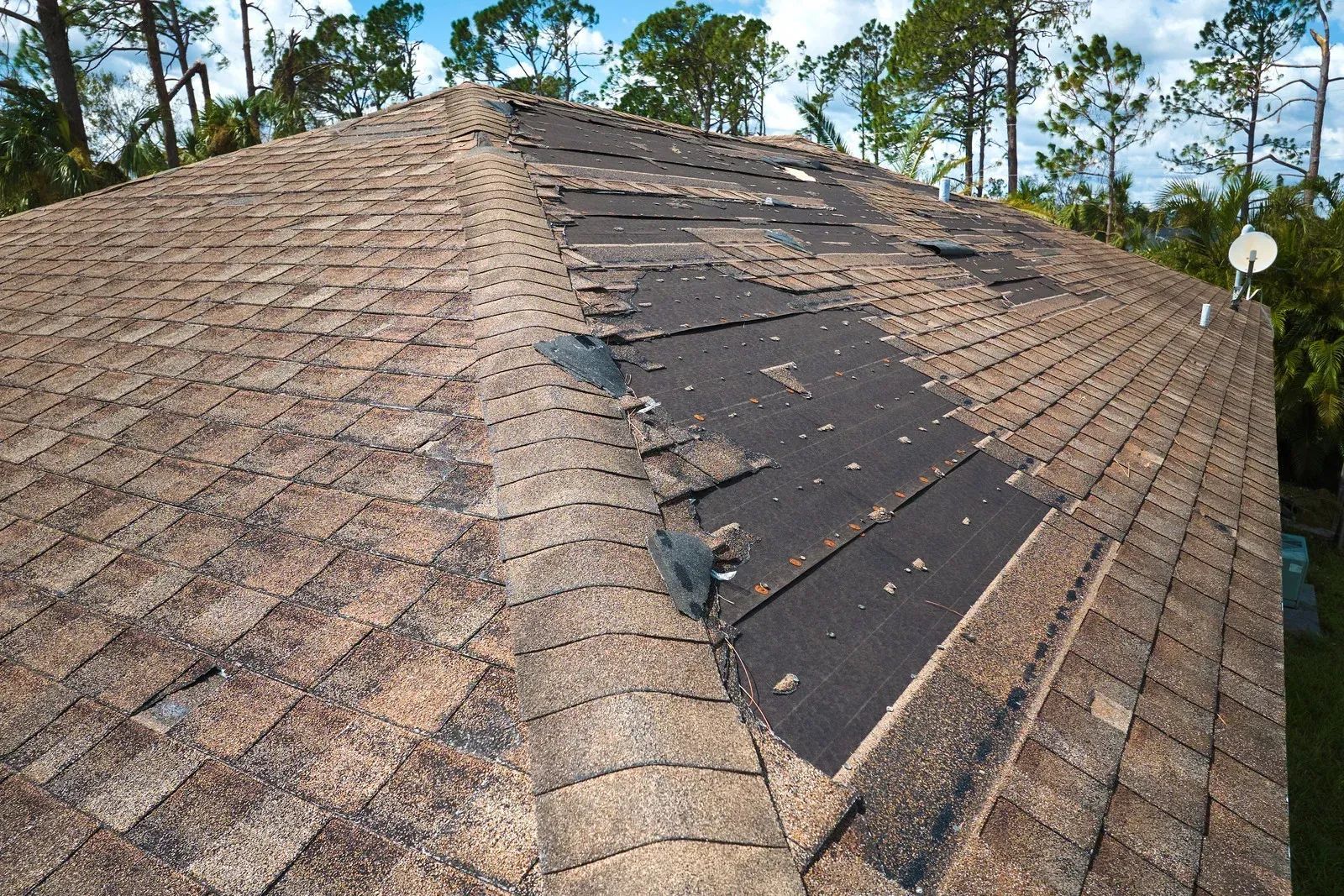
Asphalt shingles do not last forever. As they age they lose the mineral granules that protect them from sun, grow brittle, curl at the edges, and lose the self-seal strip that keeps each tab bonded to the one below. A brittle shingle lifts in wind, and a lifted shingle lets wind-driven rain reach the underlayment.
Wind and storm damage accelerate the timeline. A strong summer storm across the Philadelphia suburbs can crease or tear shingles, snap the seal bond, and scatter debris that punctures the surface. The damage is often not visible from the ground, which is why a roof can look fine and still be leaking after a storm.
TIP: After any significant wind or hail event, do a ground-level scan of your yard and gutters for shingle granules and loose tabs before you assume the roof is fine. A pile of sandy granules at the bottom of a downspout is an early sign your shingles are shedding their protective surface, and catching that early is far cheaper than waiting for the ceiling to tell you.
Ice Dams: A Winter-Specific Cause
Ice dams are one of the most misunderstood leak sources on older homes here, because the roof can be in good shape and still leak in January. Building-science research on ice dams describes the mechanism clearly: heat escaping from the living space warms the upper roof, snow melts, the meltwater runs down to the cold overhang at the eaves, and it refreezes into a ridge of ice. That ridge traps the next round of meltwater, which then backs up under the shingles and finds its way into the sheathing and the rooms below.
Why older homes are especially vulnerable
The root cause is a warm roof deck, and older homes tend to have exactly that. Under-insulated attics, compressed insulation at the eaves, and air leaking up through recessed lights, attic hatches, plumbing stacks, and chimney chases all push heat into the attic. That heat melts snow from below even when it is well below freezing outside. Poor or blocked ventilation makes it worse by letting the deck stay warm.
The fix is about heat, not just ice. Sealing attic air leaks and improving insulation keeps the roof deck cold so snow stops melting unevenly. Ventilation helps carry off the small amount of heat that still gets through. A self-adhering ice-and-water membrane at the eaves gives back-up protection so that when a dam does form, the water sitting behind it cannot get through the roof.
Gutters, Drainage, and the Overlooked Edge
Water problems often start at the very bottom of the roof. Gutters and the roof edge work together, and on an older home both have usually been neglected longer than the shingles.
Clogged gutters back water up under the shingles. When leaves and grit fill a gutter, rain overflows and, worse, sits against the roof edge where it can wick back under the first courses of shingles and rot the fascia and decking behind them. Homes surrounded by the mature oaks and maples common in these older neighborhoods fill their gutters fastest.
Failed drip edge and rotted fascia. The drip edge is the metal lip that directs runoff into the gutter instead of behind it. When it is missing, undersized, or corroded, water curls back onto the fascia board. Soft, dark, or crumbling fascia and soffit are a reliable sign that water has been getting behind the edge for a while.
Where the Water Enters vs. Where It Shows
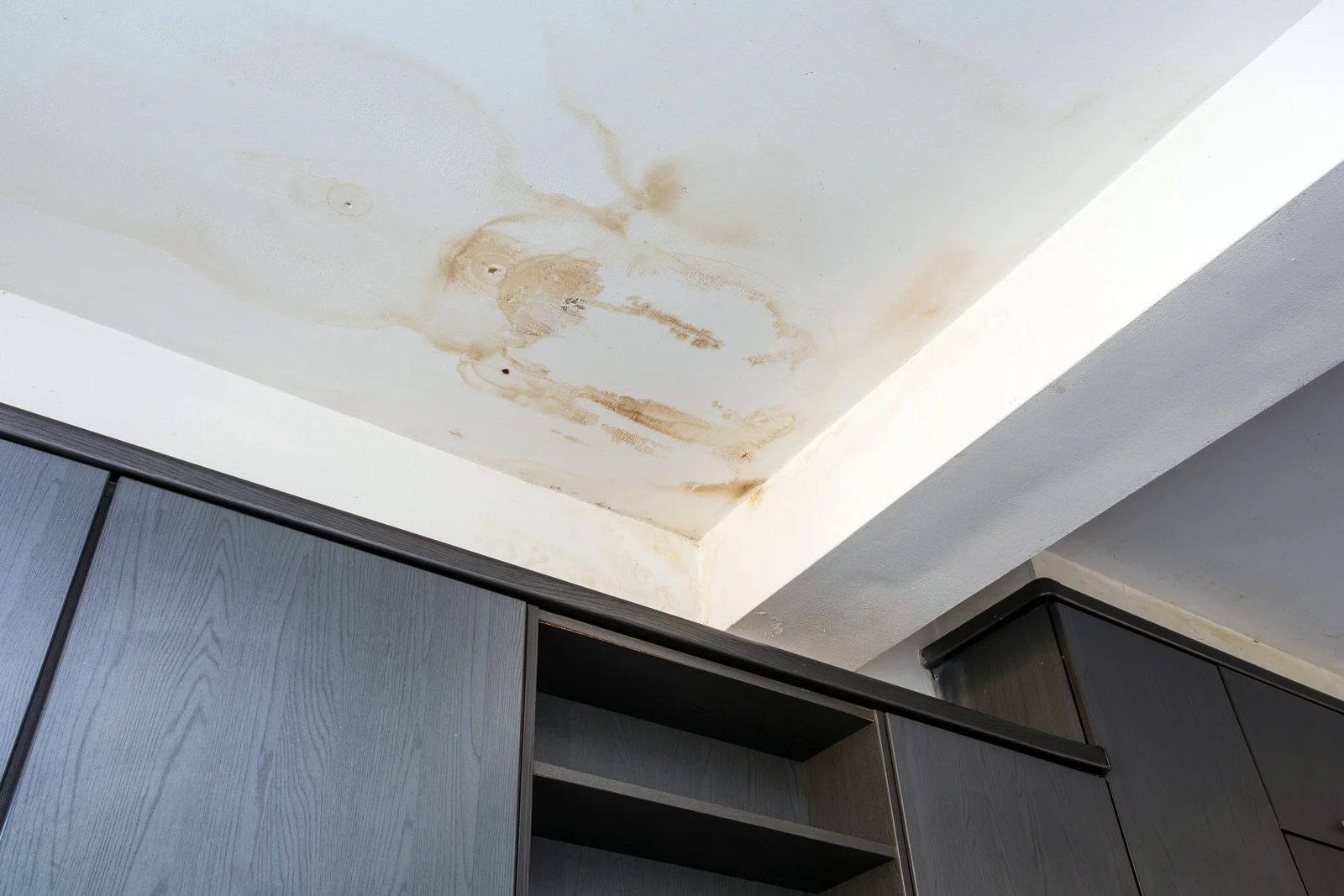
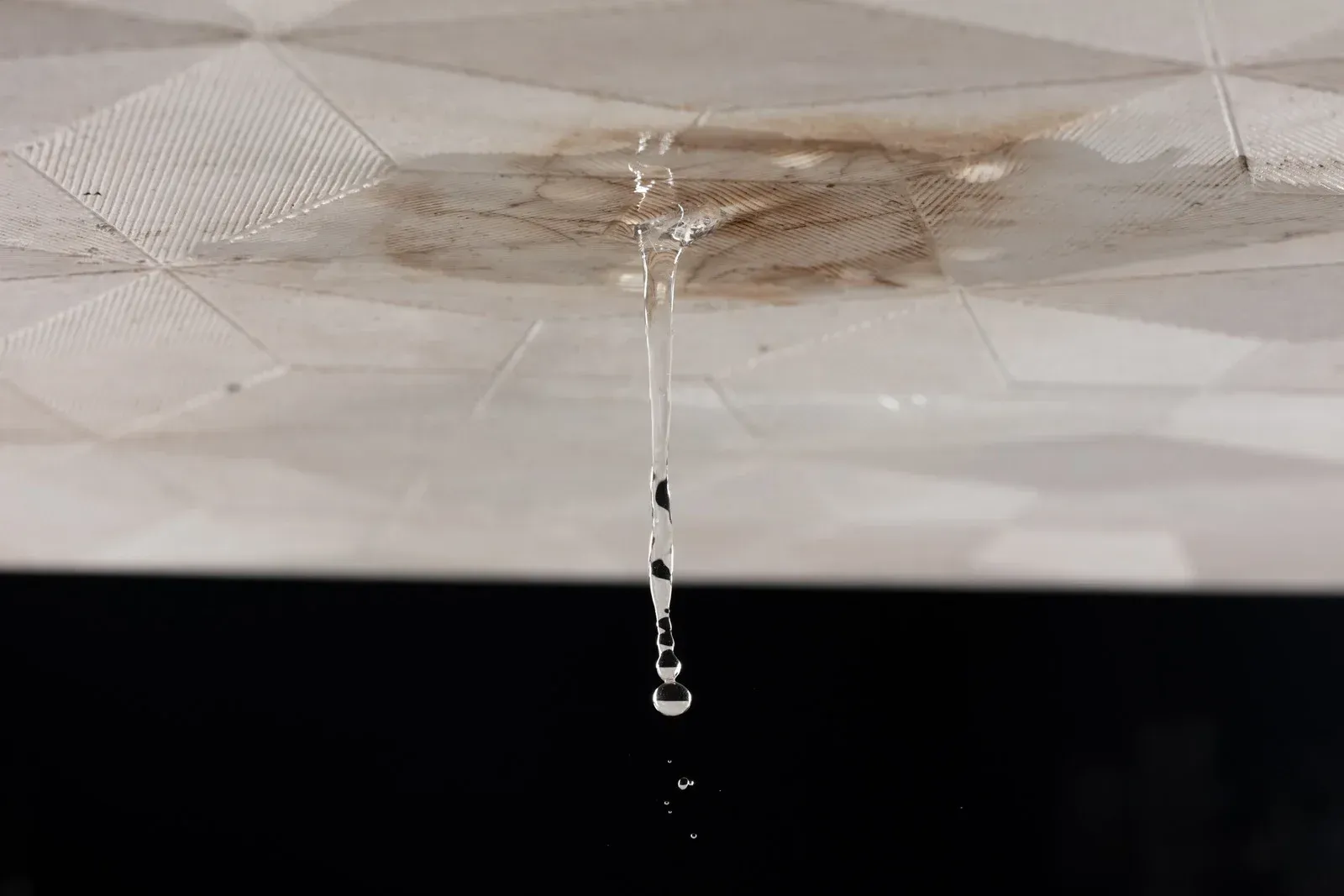
One of the hardest parts of chasing an older-home leak is that water rarely drips straight down from its entry point. It travels along the underside of the decking, runs down a rafter, wicks through insulation, and follows framing until gravity or a seam finally releases it onto the drywall. A stain in the middle of a bedroom ceiling can originate from a chimney eight feet away and higher up the slope..
WARNING: Do not assume the leak is fixed just because the drip stopped. Water finds the path of least resistance, so a leak that goes quiet after a repair, or after a dry spell, may simply be traveling a different route or waiting for the next wind-driven rain. Trapped moisture in the decking and insulation keeps causing rot and mold even when nothing is actively dripping, which is why the source has to be found and confirmed, not guessed at.
Following the water to its source
Attic inspection tells the real story. From inside the attic on a bright day, daylight at a penetration, dark water tracks on the underside of the sheathing, damp or matted insulation, and rusted nail tips all point back toward the true entry. Tracing those signs uphill from the stain is how a leak actually gets solved.
The Full Exterior Matters
A roof does not keep water out by itself. On an older home the siding, soffit, fascia, and the sealed joints around windows all share the job, and a failure in any of them can imitate a roof leak or feed one.
Siding and wall flashing
Where a roof meets a sided wall, the kickout flashing that should divert water away from the siding is frequently missing on older homes, letting water run behind the wall. Cedar shake and older siding that has weathered and split can also let moisture into the sheathing that eventually shows up as an interior stain.
Flat and low-slope sections
Many older homes here have a low-slope porch roof, dormer, or addition covered in aging built-up roofing. These sections do not shed water the way a steep pitch does, so a modern single-ply membrane such as TPO is often the right correction when the old surface has cracked or blistered. Standing water and seam failures on a flat section are a common and easily missed leak source.
Is it safe to mount a TV over a fireplace?
Yes, with the right precautions. Heat off the firebox, wall structure, and viewing angle all need checking first. A gas or electric unit with managed heat can run for years. Wood-burning fireplaces with no heat plan cause trouble.
How far above the fireplace should the TV be mounted?
A common range is 8 to 12 inches between mantel top and screen bottom, though it shifts with your fireplace and wall height. The hotter the unit, the more clearance you want, keeping the screen above rising heat.
Can the heat from my fireplace really damage a TV?
It can, usually slowly. Most sets are rated up to 100-104 degrees, and unmanaged fireplace walls can climb past that. Over time this shows as dead pixels, a warped bezel, or shutdowns. Managing heat prevents it.
Do I need a special mount for a TV over a fireplace?
Most of the time, yes. A fixed mount aims the screen over your head. A tilting mount angles down toward viewers; full-motion arms pull out and down. The right choice depends on screen size and wall height.
Can I hide the wires if my fireplace is brick or stone?
It's harder than drywall but doable. Masonry rarely has an open cavity, so the path must be planned before mounting. Options range from in-wall routing to low-profile surface channels. Mapping the route first avoids disruptive retrofits.
Should the TV be bigger or smaller than the fireplace?
As a rule, match the firebox width or go slightly smaller, keeping the wall balanced. Oversized panels over narrow hearths are common now, but proportion makes the wall read as one clean focal point, not competing elements.
Frequently Asked Questions
How do I know if my roof leak is coming from flashing or from the shingles?
You often cannot tell from the stain alone. Leaks near a chimney, wall, valley, or skylight usually point to flashing, while leaks in open field areas point to shingle or fastener failure. An inspection confirms the true source.
Why does my roof only leak sometimes and not with every rain?
Intermittent leaks mean the entry point only opens under specific conditions, like wind-driven rain, a heavy downpour, or winter ice damming. Winter-only leaks usually signal ice dams, while sideways-rain leaks usually point to flashing or a wall intersection.
Can an older roof be repaired, or does age mean full replacement?
Age alone doesn't require replacement. Many leaks are solved by correcting flashing, replacing damaged shingles, repairing drainage, or fixing a low-slope section. Replacement makes sense when shingles are broadly worn, layers have piled up, or decking is compromised.
Should I be worried about a small ceiling stain if it is not actively dripping?
Yes, a dry stain still matters. It confirms water has entered the structure, and trapped moisture keeps feeding rot and mold even without active dripping. Small stains are your early warning to fix the source before framing damage sets in.
Protect Your Older Pennsylvania Home Today
An older roof can still perform well for years, but only if its weak points are found before the next storm arrives. Flashing failures, aging shingles, ice dams, and neglected gutters rarely announce themselves clearly, and the stain on your ceiling is only a clue, not the diagnosis. Homeowners across Bucks and Montgomery counties deal with the same climate stresses year after year, which is exactly why a proper attic-level inspection matters more than guesswork or a quick patch job.
With 15+ years serving Southampton & Huntingdon Valley, Pennsylvania, Uncle Al's Roofing
traces leaks to their true source rather than just the spot where water shows up indoors. Correcting the real problem, whether it's a failed valley, a warm attic driving ice dams, or a rotted fascia board, protects your home's framing and air quality for the long term. If your roof has weathered more than a few tough seasons, reach out today to schedule an inspection before the next storm tests it again.