What Happens If You Ignore a Roof Leak? The Hidden Costs of Waiting Too Long
June 22, 2026
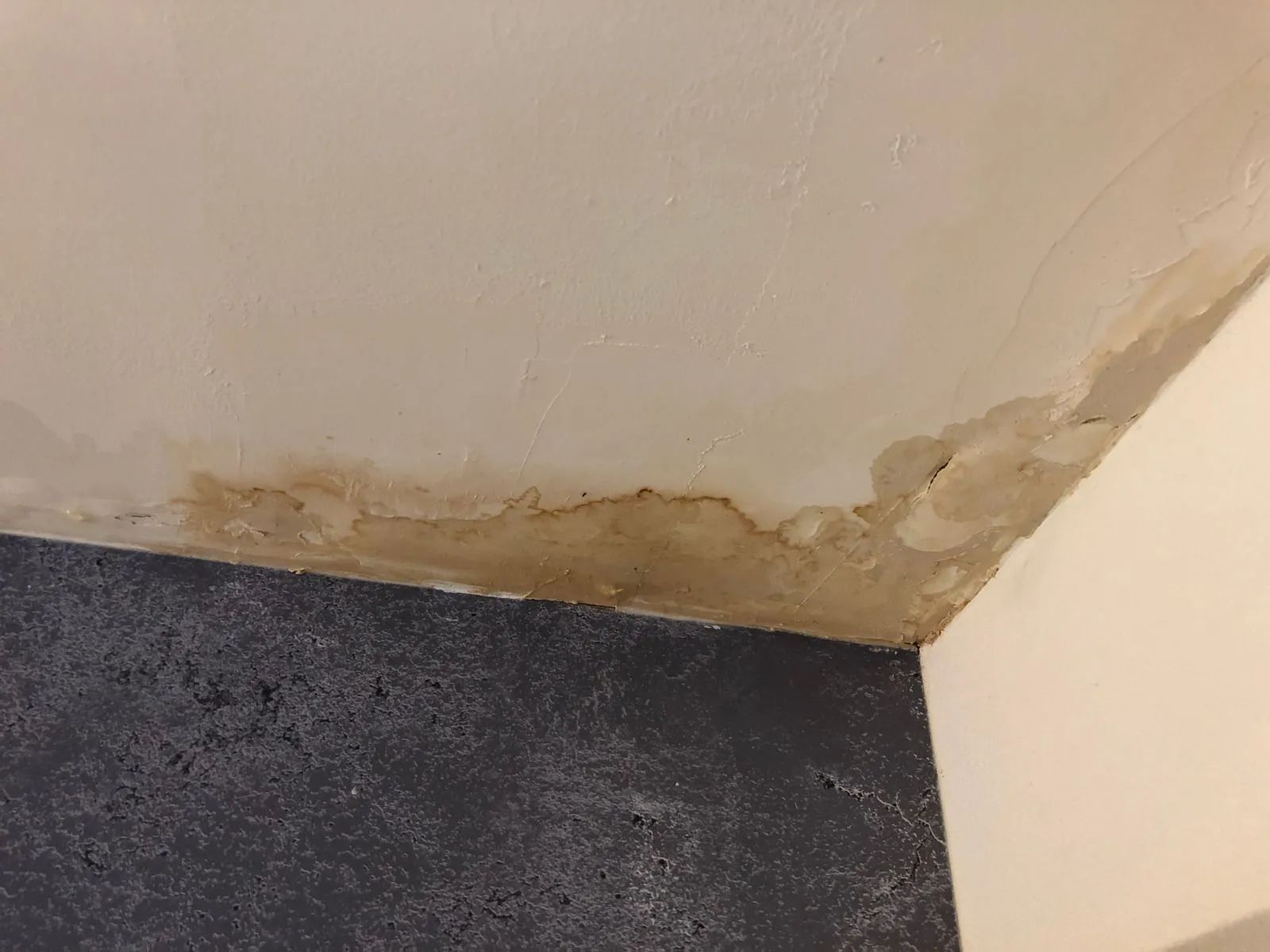
You noticed a water stain on your ceiling a few weeks ago. It was small, maybe the size of a dinner plate, and dry to the touch. You told yourself you'd deal with it after the holidays, after the busy season, after things slowed down. Then last week the rain came hard, the stain doubled in size, and now there's a soft spot in the drywall above your hallway.
That sequence plays out on service calls across Southampton and Huntingdon Valley every single spring. A roof leak almost never stays contained. Water finds the path of least resistance, and in a typical residential roof that path runs through insulation, framing, ceiling joists, and wall cavities before it ever shows up where you can see it. By the time a stain appears on your ceiling, the damage behind it has usually been building for weeks or months. Acting in the first 30 days of a leak almost always cuts the total repair scope in half compared to waiting until visible deterioration forces the issue.
What a Roof Leak Is Actually Doing Inside Your Home
The stain you see is the end of the chain, not the beginning. When water breaches your roofing system, it saturates the underlayment first, then wicks into the roof deck. A standard half-inch roof deck can absorb moisture and begin delaminating within 72 hours of sustained exposure. From there, water travels along framing members rather than falling straight down, which is why a leak at the ridge can appear as a ceiling stain 8 to 12 feet away from the actual entry point.
Structural Deterioration
Roof rafters, ridge boards, and ceiling joists are load-bearing. Once wood framing reaches a moisture content above 19 percent, fungal decay begins. You won't see it for months, but the wood is actively losing structural integrity. In homes with older dimensional lumber common across southeastern Pennsylvania, replacement of deteriorated framing adds significant scope to what started as a shingle repair.
Insulation Failure
Fiberglass batt insulation, the most common type in attics throughout the Southampton and Huntingdon Valley area, loses nearly all of its R-value when saturated. A soaked batt also holds moisture against the roof deck for weeks after rainfall stops, extending the window of damage even when the weather clears.
Mold Colonization
Mold spores are present in every attic. They need three things to activate: a food source (wood, drywall, insulation facing), warmth, and moisture. A leaking roof provides all three. Visible mold colonies can establish within 24 to 48 hours of sustained moisture in summer conditions. Once mold reaches drywall or the HVAC system, the remediation scope expands well beyond roofing.
Electrical Risk
Water migrating through ceiling cavities regularly reaches junction boxes, recessed lighting housings, and wiring runs. Water bridging an electrical connection is a fire and shock hazard. On inspections where leaks have been active for more than three weeks, we find wet insulation draped across wiring in roughly 4 out of 10 attics.
WARNING: If you see water dripping near a light fixture, ceiling fan, or any electrical box, turn off the circuit breaker for that area immediately. Do not assume the fixture is sealed. Water inside an electrical housing can cause arc faults that are not immediately visible and can ignite hours later.
The Damage Timeline: How Fast Things Escalate
Most homeowners assume a slow leak is a small problem. The timeline below shows why that assumption is expensive.
| Time Since Leak Began | What Is Happening | Severity |
|---|---|---|
| 0 to 72 hours | Underlayment wet, roof deck absorbing moisture | Low to Medium |
| 1 to 2 weeks | Insulation saturated, deck beginning to soften | Medium |
| 3 to 4 weeks | Mold spores activating, framing moisture rising | Medium to High |
| 1 to 3 months | Visible ceiling staining, possible drywall softening | High |
| 3 to 6 months | Structural framing decay, mold colony established | Very High |
| 6 months or more | Potential rafter replacement, full deck section removal | Critical |
The jump from medium to high severity is where the repair scope multiplies. A three-week-old leak addressed early may require only targeted shingle replacement and a new section of underlayment. The same leak left for three months routinely requires deck replacement, mold remediation, and new insulation on top of the roofing repair.
What We Find on Inspections in Southampton and Huntingdon Valley
Southeastern Pennsylvania runs a seasonal pattern that accelerates leak damage more than homeowners typically expect. Winters here regularly cycle between freezing and thawing, sometimes multiple times in a single week from December through March. That freeze-thaw cycle forces water deeper into any existing breach with each cycle, expanding gaps in flashing and cracking dried sealant around penetrations.
Spring storms in Bucks and Montgomery Counties arrive with high wind gusts that drive rain horizontally, pushing water under shingles at low slopes and around chimney flashing that may have performed fine in vertical rain. We inspect roofs through spring, where the homeowner had no idea there was a leak in progress because the interior damage was hidden in an unconditioned attic space they never entered.
TIP: Walk through your attic with a flashlight after the first heavy spring rain and before the first heavy fall rain each year. Look for discoloration on the underside of the roof deck, wet insulation batts, and any daylight visible through the roof surface. Catching a small breach at this stage, before ceiling penetration, typically reduces total repair scope by 60 to 70 percent.
The other common finding on inspections here is step flashing failure along dormers and sidewalls. A large portion of homes in Southampton and Huntingdon Valley were built between the 1960s and 1990s with original flashing that was never replaced during later reroofing projects. When a new roof goes on over old step flashing, that flashing continues to age. By year 15 to 20 post-installation, corrosion and caulk failure at those transitions are among the most frequent sources of active leaks we document.
Diagnosing Where Your Leak Is Actually Coming From
Interior water stains do not map directly to the leak source. Water travels. Before assuming the problem is directly above the stain, these are the areas we inspect in sequence.
| What You're Seeing | Most Likely Cause | Severity | First Step |
|---|---|---|---|
| Stain near chimney | Flashing failure or crown deterioration | High | Inspect flashing seams from roof level |
| Stain near roof valley | Valley flashing corrosion or debris dam | High | Clear debris and inspect metal flashing |
| Stain at ceiling center | Pipe boot failure or deck fastener pull-through | Medium | Locate nearest roof penetration above stain |
| Stain along exterior wall | Step flashing or kick-out flashing failure | High | Inspect wall-to-roof transition from exterior |
| Stain at ceiling edge | Ice dam or soffit-to-fascia gap | Medium to High | Check gutter condition and attic ventilation |
| Wet insulation, no visible stain | Early stage deck leak or condensation | Medium | Attic inspection with moisture meter |
| Stain after heavy wind only | Lifted or cracked shingles on windward face | Medium | Visual shingle inspection from ground or roof |
| Multiple stains after one storm | Widespread flashing failure or aged underlayment | High | Full roof inspection, not spot repair |
Repair vs. Doing Nothing: The Honest Math
We hear from homeowners regularly who held off on a repair because they were getting a full re-roof quote and decided to wait until they could do everything at once. That logic sounds reasonable and sometimes it holds. But when a known active leak is present, waiting almost always means the scope of the eventual re-roof grows.
A roof deck section that needs replacement adds labor and material beyond what a standard tear-off and re-roof would include. If mold remediation is required in the attic or ceiling cavity, that work happens before roofing begins and is typically handled by a separate contractor. Neither of those additions is small.
The most straightforward framing is this: an active leak is not a stable situation. It is actively worsening with every rainfall. A targeted repair that stops the water entry, even as a bridge to a larger project, prevents the interior damage from compounding further. Doing nothing has a cost measured in expanded scope, not just deferred inconvenience.
Skilled Roofers Serving Southampton and Huntingdon Valley Families
A roof leak does not pause between service appointments. Every week it goes unaddressed, the damage compounds through insulation, framing, and interior finishes in ways that are far more disruptive and involved to correct than the original roofing repair would have been.
Southeastern Pennsylvania's freeze-thaw winters and wind-driven spring storms push that timeline faster than homeowners accustomed to milder climates expect. The homes throughout Southampton and Huntingdon Valley carry decades of original flashing and aging roof assemblies that respond to that climate in predictable ways we see on inspections repeatedly.
At Uncle Al's Roofing, we serve homeowners across Southampton & Huntingdon Valley, Pennsylvania. Our inspections cover the full roof assembly, including the attic interior, so we know what the deck and framing look like before we quote. If you have an active leak or a stain you have been watching, we can assess the current damage scope and stop the progression before it reaches the interior finishes.
FAQs
How long can a roof leak go undetected before serious damage occurs?
A slow leak causes substantial hidden damage within 4 to 8 weeks with no visible interior sign. Water travels along framing before ceiling staining appears. By the time discoloration shows, the affected area inside the roof assembly is typically two to three times larger than the stain.
Can a single missing shingle really cause that much damage?
Yes, and faster than most homeowners expect. A missing shingle exposes underlayment directly to UV and rain. Standard felt underlayment degrades in as little as 30 days uncovered. One missing shingle left through a southeastern Pennsylvania winter regularly results in deck replacement rather than a simple shingle swap.
Is it safe to stay in the house while a roof leak is active?
In most cases yes, but with conditions. If water is near electrical fixtures or wiring, shut off that circuit immediately. If no electrical involvement exists, the primary risk is structural and mold damage. Staging a tarp over the breach point reduces interior damage while awaiting a repair appointment.
What does a roof inspection actually cover in Bucks and Montgomery Counties?
A thorough inspection covers the full roof surface, all flashing transitions, ridge and hip shingles, gutter drainage, soffit and fascia condition, and an attic interior check with a moisture meter. Ground-level or drone-only inspections miss the flashing detail and deck condition that matter most on older Southampton and Huntingdon Valley homes.
How do we know if the damage inside the roof affects re-roof scope?
Key indicators are deck softness when walked, visible delamination or dark staining on the attic deck underside, and moisture meter readings above 19 percent in framing. A roofer who skips the attic before quoting a re-roof on a home with known leak history is quoting without the information that drives scope.